


Stadium Hotels: The Next Revenue Revolution in Sports Hospitality

Stadium Hotels: The Next Revenue Revolution in Sports Hospitality

6 min read

6 min read

6 min read

Market Opportunities

Jan 13, 2026

A quiet revolution is transforming the sports hospitality landscape. Across Europe, high profile football clubs are discovering that the real estate beneath their stands can generate revenue 365 days a year, not just on matchdays.

A quiet revolution is transforming the sports hospitality landscape. Across Europe, high profile football clubs are discovering that the real estate beneath their stands can generate revenue 365 days a year, not just on matchdays.

Sean Rafter

Chairman

Thorne&Co

Sean Rafter

Chairman

Thorne&Co

Sean Rafter

Chairman

Thorne&Co

As stadium hotels emerge from boutique experiments to strategic imperatives, clubs are unlocking a commercial model that combines brand extension, fan engagement, and diversified income streams. This trend offers lessons for the broader hospitality sector about destination creation, mixed-use development, and the power of emotional real estate.

The European Vanguard

European football has led the charge in stadium hotel development, with clubs treating their grounds not as facilities but as destinations. The model varies in execution but shares a common thesis: authentic, location-specific experiences command premium pricing.

Juventus has arguably set the benchmark with its J Hotel at the Allianz Stadium in Turin. The 138-room property sits within the J Village complex and positions itself beyond matchday accommodation. The hotel offers match packages with guaranteed tickets while maintaining year-round appeal through its Tàola Restaurant, conference facilities, and spa. For Juventus, this represents vertical integration of the fan experience – from arrival to departure, the club controls touchpoints and captures spending.

Real Madrid’s €1.76 billion Santiago Bernabéu renovation demonstrates stadium hotels at scale. The development integrates hotel facilities within a metallic structure that houses retail, restaurants, and the club museum. The renovation created 66,000m² of leisure facilities, with the stadium tour alone generating approximately €73 million annually from 1.3-1.8 million visitors. The hotel component transforms the Bernabéu from a once-weekly venue into a daily destination.

In Germany, Bayern Munich partnered with Marriott to create a hotel suite inside the Allianz Arena itself—complete with signature bedding and pitch views. Borussia Mönchengladbach operates a 131-room themed hotel integrated with their club shop and museum at Borussia-Park, while venues across the Netherlands and Portugal have normalised on-site hospitality.

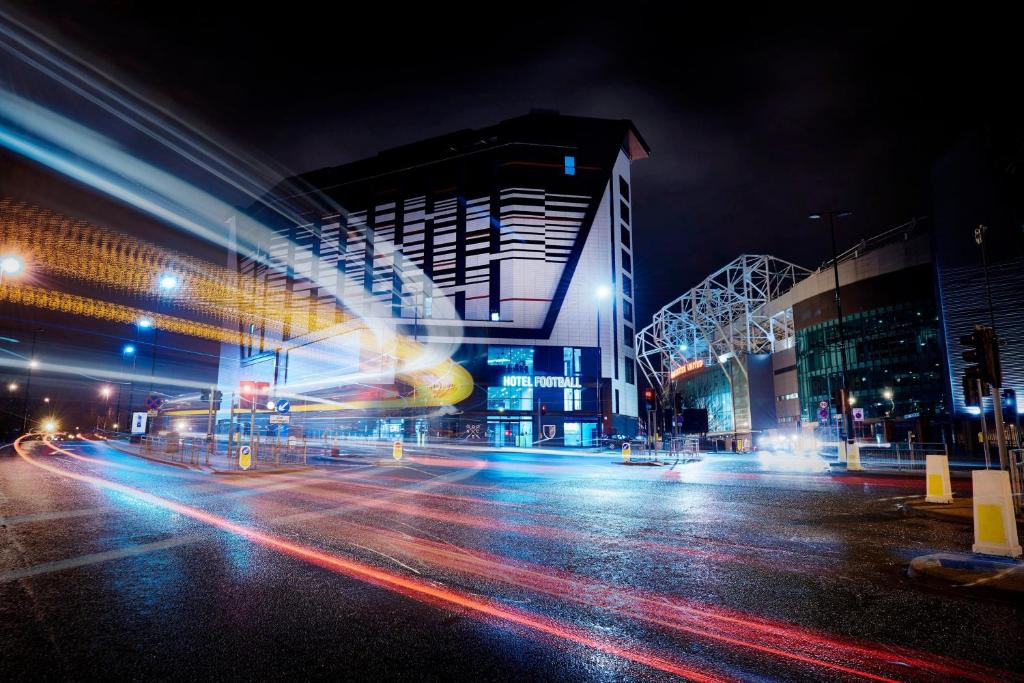
The UK market presents a different model. Hotel Football at Old Trafford—owned by the Class of 92 rather than Manchester United, opened in 2015 with 133 rooms and demonstrated that stadium-adjacent can be as lucrative as stadium-integrated. Chelsea’s Stamford Bridge site hosts two four-star hotels (Millennium and Copthorne), while smaller clubs like Blackpool and Coventry have integrated DoubleTree by Hilton properties within their grounds.
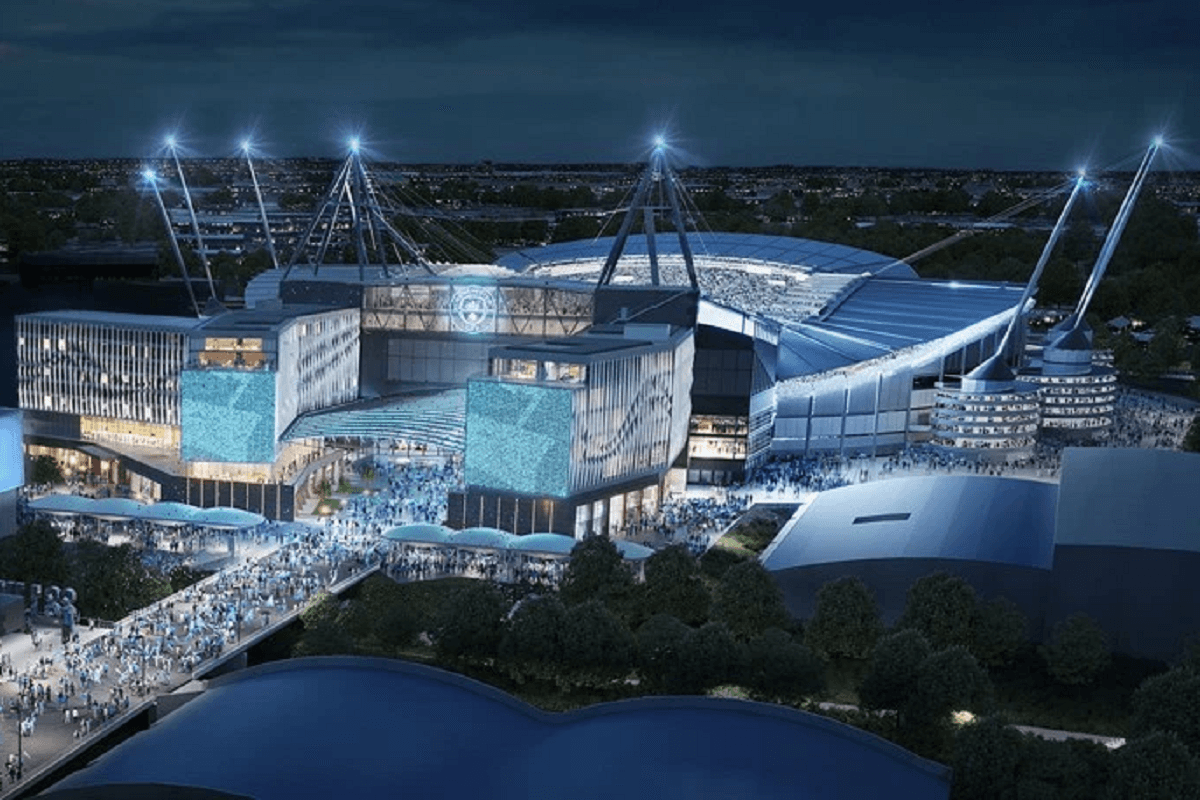

Manchester City Stadium

The Commercial Case

The stadium hotel model addresses several structural challenges in sports business:

Revenue Diversification

Football clubs remain vulnerable to on-field performance, with broadcasting revenues and matchday income fluctuating with league positions. A hotel provides counter-cyclical stability—a loss doesn’t reduce overnight bookings from visiting fans, business travelers, or tourists. The revenue runs 365 days annually rather than across 25-30 home matches.

Asset Maximisation

Most stadiums sit empty 95% of the year. Converting underutilised corners, stands, or adjacent land into accommodation activates dormant real estate. Clubs increasingly view their stadiums not as sporting infrastructure but as entertainment real estate with monetisation potential across hospitality, retail, residential, and commercial uses.

Brand Extension

A club hotel extends brand presence into daily life. Juventus-themed décor, memorabilia-lined corridors, and player-signed amenities create immersive environments that deepen supporter engagement. For corporate clients, meeting rooms overlooking the pitch offer unique settings that enhance perceived value and justify premium pricing.

Margin Control

Traditional matchday hospitality packages involve significant revenue sharing with caterers, licensees, and concessionaires. Owning the hotel allows clubs to capture full margins on accommodation, food and beverage, and ancillary services. Juventus’s guaranteed ticket packages bundle multiple profit centers under one transaction.

Data and Loyalty

Direct accommodation bookings create first-party data that clubs can leverage for merchandising, ticket sales, and membership retention. A hotel stay becomes an entry point for CRM strategies that increase lifetime supporter value.


The Atlantic Divide:
Learning from North American Sports

While European clubs integrate hotels into stadiums, North American sports have approached the model differently, revealing instructive contrasts in market structure and development philosophy.

The most notable example is the Toronto Blue Jays’ Rogers Centre, home to the only integrated hotel in North American professional sports. The Marriott City Centre Hotel sits within the stadium itself, offering field-view rooms where guests can watch games from bed. On game days, these rooms command approximately $1,500 CAD ($1,100 USD) per night – roughly 30x the cost of standard MLB tickets at $50 CAD. This “watch the game in your pajamas” offering demonstrates extreme premium positioning, targeting once-in-a-lifetime experiences rather than regular supporters.

Beyond this outlier, US development follows a distinct pattern. Rather than stadium-integrated hotels, American sports franchises favour mixed-use entertainment districts with hotels as anchor tenants:

Cleveland Browns are developing a 176-acre mixed-use district anchored by a new NFL stadium, including two upscale hotels with 450 rooms in phase one, alongside 1,100 apartments and 300,000 sq. ft. of retail

Dallas Cowboys and Texas Rangers share the Live! by Loews Arlington complex—a 300-room lifestyle hotel situated between AT&T Stadium and Globe Life Park

Los Angeles Rams’ SoFi Stadium sits on a 298-acre Hollywood Park site with plans for multiple hotels, offices, residences, and retail—a city-within-a-city model

The North American approach reflects different commercial realities. NFL and NBA franchises typically play 8-10 home games annually (versus 25-30 for European football clubs), making standalone stadium hotels economically challenging. Instead, developers create year-round mixed-use destinations where the stadium is one anchor among many.

Corporate hospitality in North America also differs structurally. Brands like Marriott partner with leagues for official “NFL Travel Hub” programs, positioning their nationwide portfolio near stadiums rather than within them. This franchise-based model suits America’s chain hotel culture and dispersed geography.
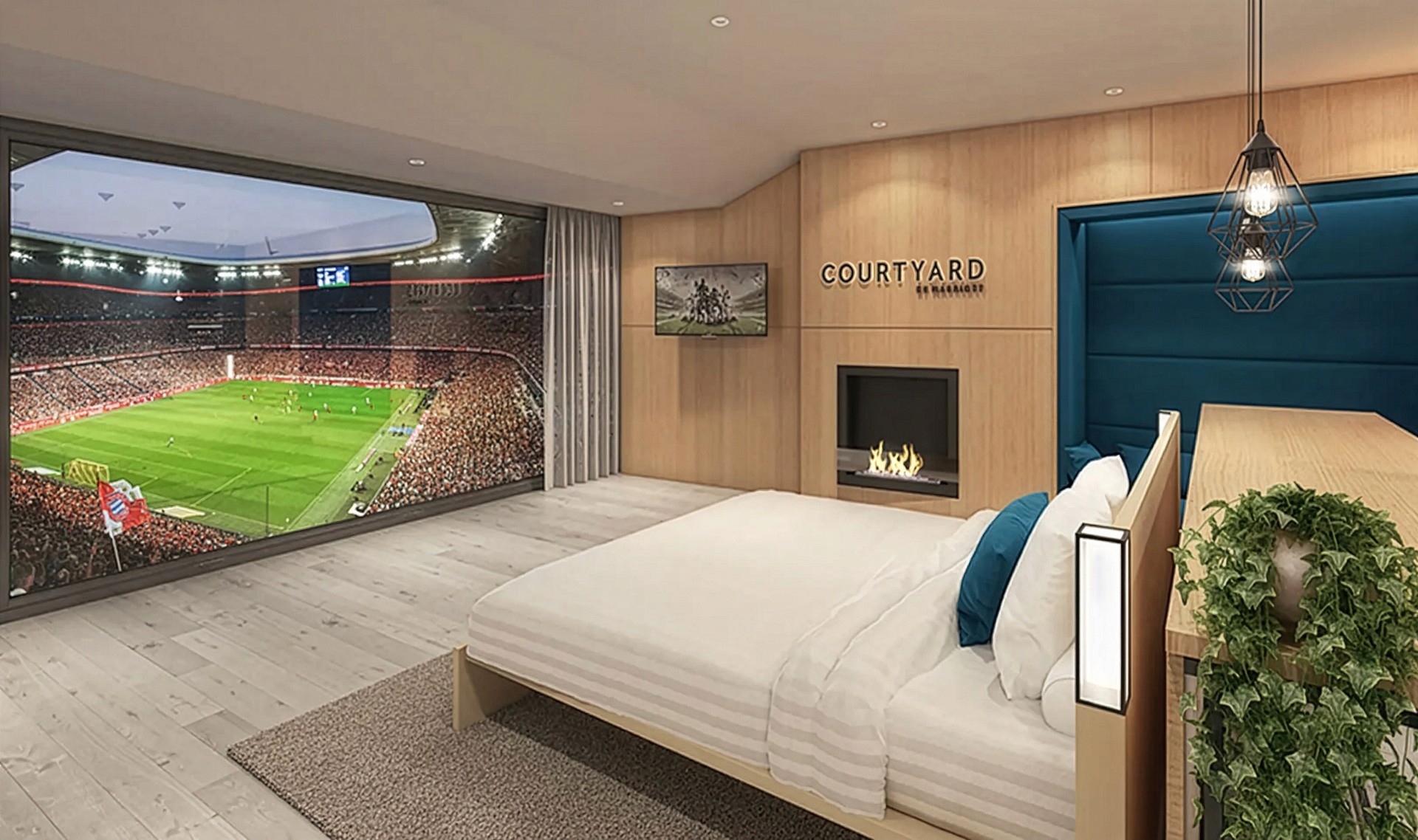

Courtyard by Marriott, Super Bowl and Soccer Sleepover


Future Outlook:
From Novelty to Necessity

Several forces will accelerate stadium hotel adoption:

1. Post-pandemic travel patterns:
Fans increasingly seek multi-day “destination” experiences rather than day trips, creating demand for accommodation at the epicenter of fandom.

2. ESG imperatives:
Integrating hotels, conference facilities, and mixed-use developments maximises land use efficiency and reduces the urban footprint of large stadiums, aligning with sustainability mandates.

3. Residential integration:
Several European clubs are exploring stadium-adjacent apartments—permanent residents who overlook the pitch. Leyton Orient and Partick Thistle already have residential units within sight of their grounds.

4. Technology convergence:
Smart stadiums with IoT infrastructure can offer hotel guests personalised experiences—from app-controlled room environments to AR stadium tours and exclusive digital content.

5. League-wide initiatives:
Professional leagues may standardise certain hospitality requirements, creating baseline expectations for integrated accommodation that smaller clubs must meet.

The model faces challenges. Not all clubs have available real estate. Urban stadiums in dense neighborhoods may lack development rights or face community opposition. Construction costs for retrofits can be prohibitive, and smaller clubs may struggle to maintain year-round occupancy without the drawing power of elite brands.

Yet the direction of travel is clear. As clubs compete not just on the pitch but in the boardroom for commercial supremacy, stadium hotels represent low-hanging fruit. They leverage existing assets, deepen fan relationships, and create revenue streams insulated from sporting performance.


Strategic Implications for Hospitality Professionals

For developers, operators, and consultants in the hospitality sector, stadium hotels offer several lessons:

Authenticity commands premiums:
Generic four-star hotels near stadiums cannot compete with properties that offer unique access and immersion. The value lies not in luxury finishes but in exclusive experiences—locker room tours, player interactions, pitch-side meals.

Mixed-use is king:
Standalone hotels in suburban stadium locations struggle outside events. Success requires integrating retail, F&B, entertainment, and business facilities that sustain demand year-round.

Partnership models vary:
Some clubs operate directly (Heart of Midlothian FC in Edinburgh), others partner with chains (Marriott-Bayern Munich), while third parties develop adjacent properties (Hotel Football). Each model has trade-offs between control, capital requirements, and operational expertise.

Brand extension works both ways:
A hotel benefits from club association, but poor service damages the club brand. Operators must maintain standards worthy of the franchise they represent.

Data integration creates value:
Hotels that integrate with club CRM systems can personalise offerings, cross-sell tickets and merchandise, and increase supporter lifetime value far beyond room revenue alone.
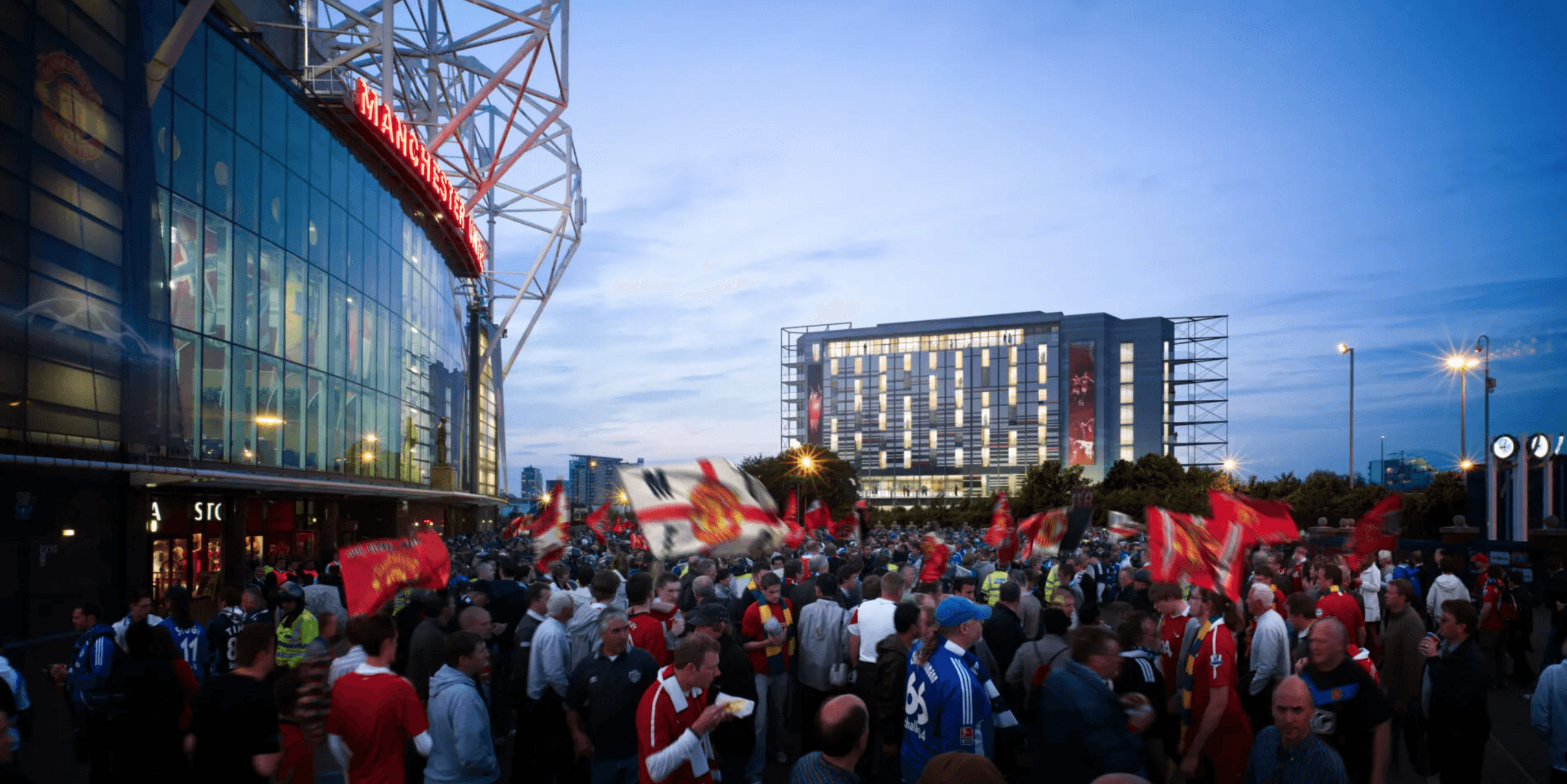
Manchester United Stadium

Conclusion

The stadium hotel represents more than an accommodation option. It is the physical manifestation of a strategic shift in how sports properties view themselves—not as event venues but as brands with real estate portfolios capable of generating multiple revenue streams from a single emotional asset.

European clubs have pioneered this model, demonstrating both its commercial viability and its variants—from luxury standalone properties to integrated mixed-use complexes. North American franchises, constrained by lower game frequency and different land use patterns, have developed the entertainment district alternative that distributes the same principles across broader geography.

For clubs, the question is no longer if to integrate hospitality but how to do it strategically. For the hospitality industry, the question is whether traditional urban and suburban hotels can compete with emotionally charged, experience-led properties that occupy the intersection of fandom, tourism, and brand loyalty.

In an increasingly experience-driven economy, the team with home-field advantage is the one that makes guests never want to leave.


About Thorne & Co
Thorne & Co is a hospitality consultancy specialising in strategy, brand development, and commercial optimization for hotels, restaurants, and leisure properties. We help clients identify emerging trends and translate them into actionable competitive advantage.

For inquiries about stadium hospitality strategy or mixed-use development opportunities, let's talk.

Follow us to keep in touch.

As stadium hotels emerge from boutique experiments to strategic imperatives, clubs are unlocking a commercial model that combines brand extension, fan engagement, and diversified income streams. This trend offers lessons for the broader hospitality sector about destination creation, mixed-use development, and the power of emotional real estate.

The European Vanguard

European football has led the charge in stadium hotel development, with clubs treating their grounds not as facilities but as destinations. The model varies in execution but shares a common thesis: authentic, location-specific experiences command premium pricing.

Juventus has arguably set the benchmark with its J Hotel at the Allianz Stadium in Turin. The 138-room property sits within the J Village complex and positions itself beyond matchday accommodation. The hotel offers match packages with guaranteed tickets while maintaining year-round appeal through its Tàola Restaurant, conference facilities, and spa. For Juventus, this represents vertical integration of the fan experience – from arrival to departure, the club controls touchpoints and captures spending.

Real Madrid’s €1.76 billion Santiago Bernabéu renovation demonstrates stadium hotels at scale. The development integrates hotel facilities within a metallic structure that houses retail, restaurants, and the club museum. The renovation created 66,000m² of leisure facilities, with the stadium tour alone generating approximately €73 million annually from 1.3-1.8 million visitors. The hotel component transforms the Bernabéu from a once-weekly venue into a daily destination.

In Germany, Bayern Munich partnered with Marriott to create a hotel suite inside the Allianz Arena itself—complete with signature bedding and pitch views. Borussia Mönchengladbach operates a 131-room themed hotel integrated with their club shop and museum at Borussia-Park, while venues across the Netherlands and Portugal have normalised on-site hospitality.

The UK market presents a different model. Hotel Football at Old Trafford—owned by the Class of 92 rather than Manchester United, opened in 2015 with 133 rooms and demonstrated that stadium-adjacent can be as lucrative as stadium-integrated. Chelsea’s Stamford Bridge site hosts two four-star hotels (Millennium and Copthorne), while smaller clubs like Blackpool and Coventry have integrated DoubleTree by Hilton properties within their grounds.


Manchester City Stadium

The Commercial Case

The stadium hotel model addresses several structural challenges in sports business:

Revenue Diversification

Football clubs remain vulnerable to on-field performance, with broadcasting revenues and matchday income fluctuating with league positions. A hotel provides counter-cyclical stability—a loss doesn’t reduce overnight bookings from visiting fans, business travelers, or tourists. The revenue runs 365 days annually rather than across 25-30 home matches.

Asset Maximisation

Most stadiums sit empty 95% of the year. Converting underutilised corners, stands, or adjacent land into accommodation activates dormant real estate. Clubs increasingly view their stadiums not as sporting infrastructure but as entertainment real estate with monetisation potential across hospitality, retail, residential, and commercial uses.

Brand Extension

A club hotel extends brand presence into daily life. Juventus-themed décor, memorabilia-lined corridors, and player-signed amenities create immersive environments that deepen supporter engagement. For corporate clients, meeting rooms overlooking the pitch offer unique settings that enhance perceived value and justify premium pricing.

Margin Control

Traditional matchday hospitality packages involve significant revenue sharing with caterers, licensees, and concessionaires. Owning the hotel allows clubs to capture full margins on accommodation, food and beverage, and ancillary services. Juventus’s guaranteed ticket packages bundle multiple profit centers under one transaction.

Data and Loyalty

Direct accommodation bookings create first-party data that clubs can leverage for merchandising, ticket sales, and membership retention. A hotel stay becomes an entry point for CRM strategies that increase lifetime supporter value.


The Atlantic Divide:
Learning from North American Sports

While European clubs integrate hotels into stadiums, North American sports have approached the model differently, revealing instructive contrasts in market structure and development philosophy.

The most notable example is the Toronto Blue Jays’ Rogers Centre, home to the only integrated hotel in North American professional sports. The Marriott City Centre Hotel sits within the stadium itself, offering field-view rooms where guests can watch games from bed. On game days, these rooms command approximately $1,500 CAD ($1,100 USD) per night – roughly 30x the cost of standard MLB tickets at $50 CAD. This “watch the game in your pajamas” offering demonstrates extreme premium positioning, targeting once-in-a-lifetime experiences rather than regular supporters.

Beyond this outlier, US development follows a distinct pattern. Rather than stadium-integrated hotels, American sports franchises favour mixed-use entertainment districts with hotels as anchor tenants:

Cleveland Browns are developing a 176-acre mixed-use district anchored by a new NFL stadium, including two upscale hotels with 450 rooms in phase one, alongside 1,100 apartments and 300,000 sq. ft. of retail

Dallas Cowboys and Texas Rangers share the Live! by Loews Arlington complex—a 300-room lifestyle hotel situated between AT&T Stadium and Globe Life Park

Los Angeles Rams’ SoFi Stadium sits on a 298-acre Hollywood Park site with plans for multiple hotels, offices, residences, and retail—a city-within-a-city model

The North American approach reflects different commercial realities. NFL and NBA franchises typically play 8-10 home games annually (versus 25-30 for European football clubs), making standalone stadium hotels economically challenging. Instead, developers create year-round mixed-use destinations where the stadium is one anchor among many.

Corporate hospitality in North America also differs structurally. Brands like Marriott partner with leagues for official “NFL Travel Hub” programs, positioning their nationwide portfolio near stadiums rather than within them. This franchise-based model suits America’s chain hotel culture and dispersed geography.


Courtyard by Marriott, Super Bowl and Soccer Sleepover


Future Outlook:
From Novelty to Necessity

Several forces will accelerate stadium hotel adoption:

1. Post-pandemic travel patterns:
Fans increasingly seek multi-day “destination” experiences rather than day trips, creating demand for accommodation at the epicenter of fandom.

2. ESG imperatives:
Integrating hotels, conference facilities, and mixed-use developments maximises land use efficiency and reduces the urban footprint of large stadiums, aligning with sustainability mandates.

3. Residential integration:
Several European clubs are exploring stadium-adjacent apartments—permanent residents who overlook the pitch. Leyton Orient and Partick Thistle already have residential units within sight of their grounds.

4. Technology convergence:
Smart stadiums with IoT infrastructure can offer hotel guests personalised experiences—from app-controlled room environments to AR stadium tours and exclusive digital content.

5. League-wide initiatives:
Professional leagues may standardise certain hospitality requirements, creating baseline expectations for integrated accommodation that smaller clubs must meet.

The model faces challenges. Not all clubs have available real estate. Urban stadiums in dense neighborhoods may lack development rights or face community opposition. Construction costs for retrofits can be prohibitive, and smaller clubs may struggle to maintain year-round occupancy without the drawing power of elite brands.

Yet the direction of travel is clear. As clubs compete not just on the pitch but in the boardroom for commercial supremacy, stadium hotels represent low-hanging fruit. They leverage existing assets, deepen fan relationships, and create revenue streams insulated from sporting performance.


Strategic Implications for Hospitality Professionals

For developers, operators, and consultants in the hospitality sector, stadium hotels offer several lessons:

Authenticity commands premiums:
Generic four-star hotels near stadiums cannot compete with properties that offer unique access and immersion. The value lies not in luxury finishes but in exclusive experiences—locker room tours, player interactions, pitch-side meals.

Mixed-use is king:
Standalone hotels in suburban stadium locations struggle outside events. Success requires integrating retail, F&B, entertainment, and business facilities that sustain demand year-round.

Partnership models vary:
Some clubs operate directly (Heart of Midlothian FC in Edinburgh), others partner with chains (Marriott-Bayern Munich), while third parties develop adjacent properties (Hotel Football). Each model has trade-offs between control, capital requirements, and operational expertise.

Brand extension works both ways:
A hotel benefits from club association, but poor service damages the club brand. Operators must maintain standards worthy of the franchise they represent.

Data integration creates value:
Hotels that integrate with club CRM systems can personalise offerings, cross-sell tickets and merchandise, and increase supporter lifetime value far beyond room revenue alone.

Manchester United Stadium

Conclusion

The stadium hotel represents more than an accommodation option. It is the physical manifestation of a strategic shift in how sports properties view themselves—not as event venues but as brands with real estate portfolios capable of generating multiple revenue streams from a single emotional asset.

European clubs have pioneered this model, demonstrating both its commercial viability and its variants—from luxury standalone properties to integrated mixed-use complexes. North American franchises, constrained by lower game frequency and different land use patterns, have developed the entertainment district alternative that distributes the same principles across broader geography.

For clubs, the question is no longer if to integrate hospitality but how to do it strategically. For the hospitality industry, the question is whether traditional urban and suburban hotels can compete with emotionally charged, experience-led properties that occupy the intersection of fandom, tourism, and brand loyalty.

In an increasingly experience-driven economy, the team with home-field advantage is the one that makes guests never want to leave.


About Thorne & Co
Thorne & Co is a hospitality consultancy specialising in strategy, brand development, and commercial optimization for hotels, restaurants, and leisure properties. We help clients identify emerging trends and translate them into actionable competitive advantage.

For inquiries about stadium hospitality strategy or mixed-use development opportunities, let's talk.

Follow us to keep in touch.